Document Actions


Willkommen, Bienvenue, Welcome ...
Helen E. Hartnell, Member of Berlin Local Organizing Committee
 Willkommen,
Bienvenue, Welcome to Berlin, the city that is so much more than the
setting of your wildest dreams and worst nightmares. After years of
relative isolation during the post-war era, the city has re-emerged as
a major crossroads. Berlin is a frontier boom town, a nigh
inconceivably vibrant cultural metropolis, the capital of reunified
Germany, and a natural oasis, all rolled into one. The city has made
enormous strides towards reinventing itself as the iconic European city
of the 21st century, while taking care not to leave its tragic history
behind. Berlin is an apt locale for thinking about “Law and Society in
the 21st Century: Transformations, Resistances, Futures,” since many
evoke the fall of the Berlin Wall in 1989 as the symbolic beginning of
the 21st century. Berlin and Humboldt University, our host institution,
may go down in history once more – this time as the site of the largest
LSA/RCSL Joint Conference ever. Come and help make it one of the
best!
Willkommen,
Bienvenue, Welcome to Berlin, the city that is so much more than the
setting of your wildest dreams and worst nightmares. After years of
relative isolation during the post-war era, the city has re-emerged as
a major crossroads. Berlin is a frontier boom town, a nigh
inconceivably vibrant cultural metropolis, the capital of reunified
Germany, and a natural oasis, all rolled into one. The city has made
enormous strides towards reinventing itself as the iconic European city
of the 21st century, while taking care not to leave its tragic history
behind. Berlin is an apt locale for thinking about “Law and Society in
the 21st Century: Transformations, Resistances, Futures,” since many
evoke the fall of the Berlin Wall in 1989 as the symbolic beginning of
the 21st century. Berlin and Humboldt University, our host institution,
may go down in history once more – this time as the site of the largest
LSA/RCSL Joint Conference ever. Come and help make it one of the
best!
 The
Humboldt Universität zu Berlin (“HU”), is a relative
latecomer to the European university scene. Founded in 1810 as
Friedrich-Wilhelms-Universität under the guiding humanist
vision of Wilhelm von Humboldt, who insisted upon the unity of teaching
and research, the university was renamed in 1949.
The
Humboldt Universität zu Berlin (“HU”), is a relative
latecomer to the European university scene. Founded in 1810 as
Friedrich-Wilhelms-Universität under the guiding humanist
vision of Wilhelm von Humboldt, who insisted upon the unity of teaching
and research, the university was renamed in 1949.
The law faculty was one of the original four faculties at Humboldt; today it is one among eleven. The main venues for the LSA/RCSL meetings are the HU Main Building and the HU Law Faculty, plus a nearby restored annex (“Seminar”) building. The two main historical buildings are located across from one another on Unter den Linden, Berlin’s most famous boulevard. Linden refers to the trees, which are called “lime” trees in the Queen’s English. (Hitler, who hated Berlin, had the trees cut down.)
 The
HU Main Building is lodged in the 18th century palace of
Prince Heinrich of Prussia, while the Law Faculty is located in the
royal library from the same era. (Both buildings were rebuilt after
sustaining heavy wartime damage.) The baroque Law Faculty building sits
on Bebelplatz, scene of the May 1933 book burning, and now the site of
Israeli sculptor Micha Ullman’s monument Library.
The
HU Main Building is lodged in the 18th century palace of
Prince Heinrich of Prussia, while the Law Faculty is located in the
royal library from the same era. (Both buildings were rebuilt after
sustaining heavy wartime damage.) The baroque Law Faculty building sits
on Bebelplatz, scene of the May 1933 book burning, and now the site of
Israeli sculptor Micha Ullman’s monument Library.
A few doors down from the HU Main Building is the Zeughaus (Arsenal) – now the Museum of German History – where the Nazis organized an exhibit of Entartete Kunst (“Degenerate Art”) in 1938. To the great dismay of the Nazis, who intended the paintings to create revulsion amongst the population, the Berliners loved the art, and thronged to see the exhibition. A few blocks away is Peter Eisenmann’s new “Memorial to the Murdered Jews of Europe.” Also within easy reach by foot are Checkpoint Charlie, the Brandenburg Gate, and the ancient Babylonian Gate of Ishtar, to name a few.
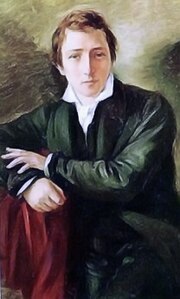
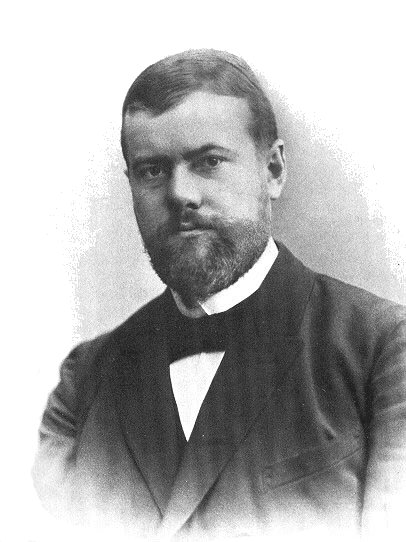
Hegel, Mommsen, and von Savigny taught at Humboldt’s pre-war incarnation, as did Carl Schmitt (startingn 1933, thus coinciding with Hitler’s rise to power), while Heine, Marx, Engels, and Weber studied there.
 C. Schmitt |
 Hegel |
 von Savigny |
 Mommsen |
 Karl Marx |
 H. Heine |
 Max Weber |

 The
Joint Meeting takes place in Berlin’s Mitte (“middle”)
district, which is the geographical center of an enormous conurbation
that covers 889 sq. km, or roughly 340 square miles. Nearly 40% of this
terrain consists of forest or park; and just beyond the city limits is
the (former East German) state (Land) of Brandenburg, with its
relatively unspoiled natural beauty and villages. The city-state of
Berlin itself has around 3.5 million residents, according to official
statistics, which makes it the second most populous city in the EU. You
would not know it, however, by the pace of life, which is mellow for a
city of its size. Perhaps owing to outstanding public transportation,
its flat, wide streets, and the many parks and lakes, Berlin is a haven
for pedestrians, bicyclists, and beach lovers. The area around our
meeting site – which until 1990 was “downtown East Berlin” and the
showcase of the Eastern Bloc – tends to be a bit more congested,
largely because it is Berlin’s main (though by no means only) tourist
destination. Wander a bit away from Unter den Linden and the major
sites, and you will discover a city of many faces, ideal for exploring
by foot both day and night. Or hop on a boat, when you can’t take
another step, and experience a few of Berlin’s 200 kilometers (120
miles) of navigable waterways.
The
Joint Meeting takes place in Berlin’s Mitte (“middle”)
district, which is the geographical center of an enormous conurbation
that covers 889 sq. km, or roughly 340 square miles. Nearly 40% of this
terrain consists of forest or park; and just beyond the city limits is
the (former East German) state (Land) of Brandenburg, with its
relatively unspoiled natural beauty and villages. The city-state of
Berlin itself has around 3.5 million residents, according to official
statistics, which makes it the second most populous city in the EU. You
would not know it, however, by the pace of life, which is mellow for a
city of its size. Perhaps owing to outstanding public transportation,
its flat, wide streets, and the many parks and lakes, Berlin is a haven
for pedestrians, bicyclists, and beach lovers. The area around our
meeting site – which until 1990 was “downtown East Berlin” and the
showcase of the Eastern Bloc – tends to be a bit more congested,
largely because it is Berlin’s main (though by no means only) tourist
destination. Wander a bit away from Unter den Linden and the major
sites, and you will discover a city of many faces, ideal for exploring
by foot both day and night. Or hop on a boat, when you can’t take
another step, and experience a few of Berlin’s 200 kilometers (120
miles) of navigable waterways.
There is too much history, art, culture and nature in and around Berlin to summarize here. Check the local Joint Meeting website now and again ( http://www.lsa-berlin.org) for information about cultural events in late July and early August, suggested readings, recommended films, and the Berlin Guide that is currently under preparation. While much of the local website is in German, the English content is expanding, and will be filled out by summer. And for those who really can’t wait to experience Berlin, you don’t have to! Check out the Berlin web cam from Potsdamer Platz.
 Abschließender Newsletter (Nr. 7, November 2007)